UC Chile Leads Global Effort to Bring Clean Water to Indonesian Community
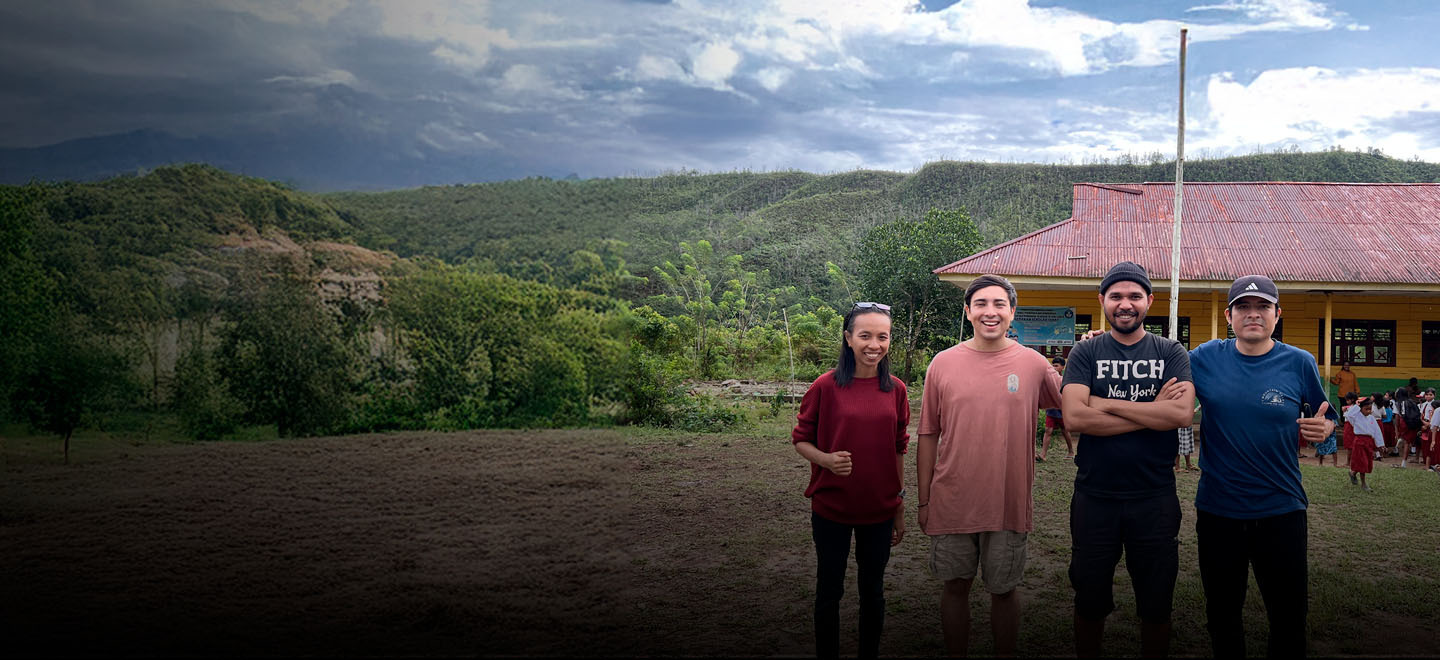
Over 16,000 kilometers from Chile, students and professors from the UC Chile School of Construction, supported by the Office of the Vice President for International Affairs and working in collaboration with local organizations and institutions, are leading a project in the village of Wansar, located in the Maluku Islands. The goal: to provide the community with access to clean drinking water—boosting development and significantly improving the quality of life for its residents.
photo_camera Thanks to a project led by the UC Chile School of Construction and local institutions, the 174 residents of Wansar in the Maluku Islands will soon have access to clean drinking water. (Photo credit: UC Chile Students in Wansar)
Through a joint effort involving professors, undergraduate and graduate students, the Office of Global Mobility (under the Office of the Vice President for International Affairs (VRAI, as per its Spanish acronym)), the School of Construction, Universitas Kristen Indonesia Maluku, the NGO Proyecto Universal, and the NGO Pohon Sagoe Indonesia, two UC Chile students are currently carrying out a global collaboration project aimed at developing a potable water system for this remote rural community.
Wansar is a traditional village nestled in the mountains of Buru, one of the islands in the Maluku archipelago in eastern Indonesia. The community is difficult to reach and remains isolated—located some 80 kilometers from the island’s main town, Namlea. With a population of about 174 people, Wansar suffers from the challenges of geographic isolation, which limits access to clean, safe water sources.
From Chile to Indonesia
This situation came to the attention of Pontificia Universidad Católica de Chile through its collaboration with the Indonesian NGO Pohon Sagoe, as part of the Pallqa Cooperation and Leadership Initiative. The initiative promotes Global South–South collaboration by enabling students to work with communities in the Maluku Islands, contributing to improvements in health and education while also learning from cross-cultural experiences. Carried out annually, the program seeks to support communities in various countries within a global context.
UC Chile’s Office of Global Mobility, under the Office of the Vice President for International Affairs, and the School of Construction took on the challenge of developing a potable water system for Wansar—over 16,000 kilometers away. The project faced numerous obstacles, including a mountainous, hard-to-reach location and the need to operate across four different languages. Nonetheless, the team committed to working alongside the local community and partner organizations to bring the Drinking Water System in Wansar Community project to life.
As Cristián Díaz, Director of Global Mobility explains, “The impact of this collaborative work lies in how we embed learning, teaching, and research experiences within an international context. This philosophy guides much of the university’s public engagement work: exchanging knowledge and wisdom in service of caring for our shared home. The Wansar Project truly reflects a spirit of collaboration, mutual understanding, and friendship—one that helps us achieve real, tangible goals, like delivering clean drinking water to a community for the first time.”
The project brings together local communities and multiple institutions in a joint effort to provide Wansar with reliable access to clean and safe water. The goal is to install a sustainable system that supplies water directly to households, addressing a global challenge and advancing United Nations Sustainable Development Goal 6: Clean Water and Sanitation.
The project team arrived in Indonesia on January 31 of this year, after more than 72 hours of travel by air, sea, and land. Once on site, they began the first stages of planning and development. The project is expected to be completed by the end of August.
An Example of South–South Cooperation
The project began in the first semester of 2024, following discussions between the Office of Global Mobility at UC Chile’s Office of the Vice President for International Affairs and the Pohon Sagoe Indonesia Foundation, with whom the university has maintained a collaborative relationship for over three years. The case eventually reached Professor Freddy Yáñez from the School of Construction, who, moved by the situation in Wansar and its lack of access to clean water, decided to develop a project in coordination with the Office of Global Mobility.
Seeing the connection with what was happening in Wansar, Professor Yáñez identified a valuable opportunity within the elective course he was co-teaching with Professor Javiera Martínez that semester: "Public Role and Social Commitment in Construction". It was the perfect space to present the case to students. From the start, he knew it wouldn’t be an easy challenge—few would be willing to take it on. It involved managing a complex project in a foreign language (primarily English), in unfamiliar terrain, and within an isolated community.
Among the students in the course was Nicolás Aguilera, who stepped up to the challenge. He joined Professors Yáñez and Martínez in developing the proposal that would significantly improve the quality of life for Wansar’s residents. Later in 2024, Professor Carlos Garrido also came on board. He was teaching the course Design and Execution of Hydraulic Works and accepted the role of guiding the students and serving as the project’s technical advisor—fully aware of the logistical, linguistic, social, and climatic hurdles they would face.
Building Networks with International Partners
The team knew that if the community welcomed the project, they would need a way to make it happen. On one hand, they had to find a professional team in Indonesia familiar with local construction practices. On the other, they needed a source of funding to purchase materials.
That’s when the Office of Global Mobility began reaching out to institutions in Indonesia to establish a partnership that would provide skilled local support to help carry out the initiative conceived at UC Chile—and potentially serve as a model for future responses to global challenges.
Their call was answered by Universitas Kristen Indonesia, which agreed to join the project and provide technical support on the ground. The partnership was formalized in November 2024 through an agreement signed by the university’s president, Dr. Henky Herzon Hetharia, and UC Chile’s representative, Director Cristián Díaz, during an institutional mission to China and Indonesia.
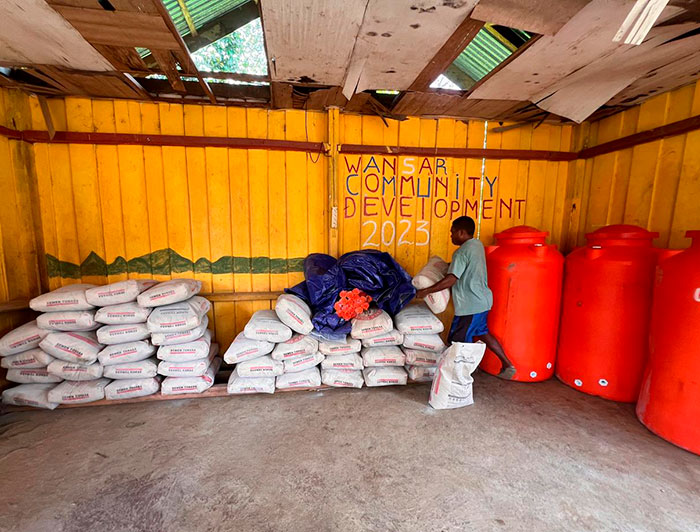
The proposal had already been approved by both the Wansar community and the NGO Pohon Sagoe, which has supported local residents since 2023 through its Wansar Community Development project. The NGO would accompany the community throughout the implementation process.
In July 2024, the team—now composed of Professor Yáñez, student Nicolás, and the support of the Office of Global Mobility and their Indonesian partners—submitted a grant application to the international fund of SELAVIP (the Latin American, African and Asian Social Housing Service). In October, they received the news: their proposal had been selected for funding.
Around that time, Braulio Rodríguez, a student in the Master's in Construction program at UC Chile, learned about the project and decided to join the team. With the funding secured, a viable plan in place, institutional backing, and the community’s support, only one thing remained: to go and make it happen.
Journey to Wansar
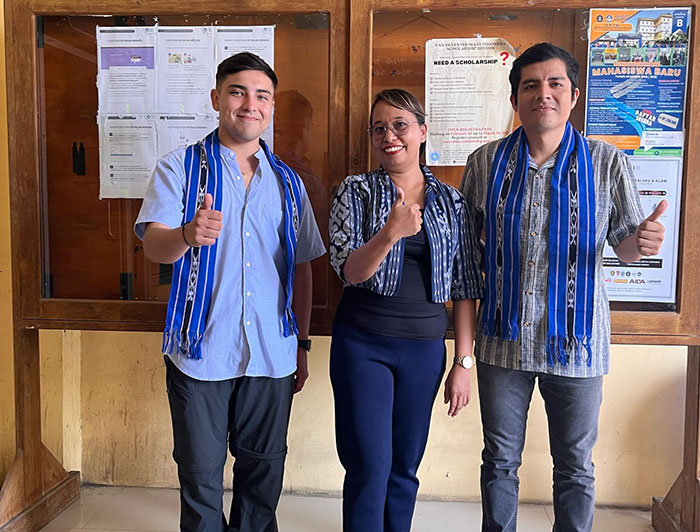
As part of the Pallqa Program for Cooperation and Leadership, Nicolás Aguilar and Braulio Rodríguez received the VRAI Global Mobility scholarship, which supported their travel and allowed them to contribute to the initial stages of the project.
On January 31, 2025, the UC Chile students arrived in Jakarta, the capital of Indonesia, after a 19-hour flight. They would spend the next three months working on the project. A week later, their professor, Freddy Yáñez joined them. Their journey to Wansar was only just beginning. From Jakarta, they took a three-hour flight to Ambon, then boarded a nine-hour ferry ride to Namlea, on Buru Island. From there, they traveled by bus and then by private transport, guided by local community members. The final 80 kilometers took them through mountainous terrain, rivers, and steep paths deep into the island—highlighting the significant infrastructure, health, and education challenges faced by the region.
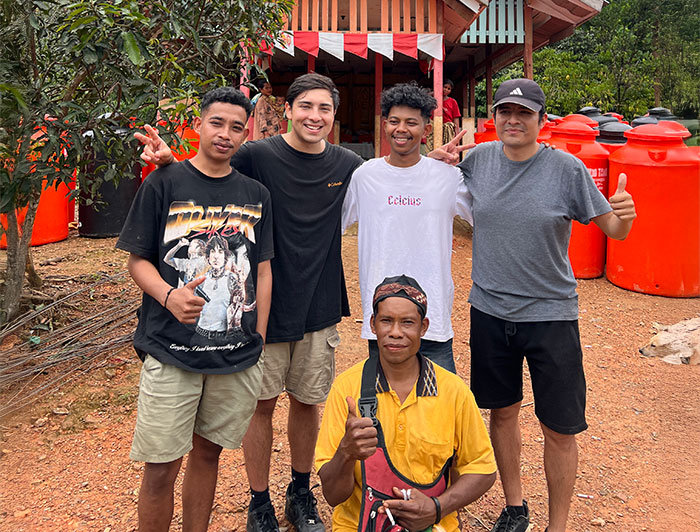
In the first few days, they collaborated with local teams, holding meetings with students and professors from Universitas Kristen Indonesia Maluku, the Pohon Sagoe team, and community members, who welcomed them with great enthusiasm and hope for the project now entering its implementation pase.
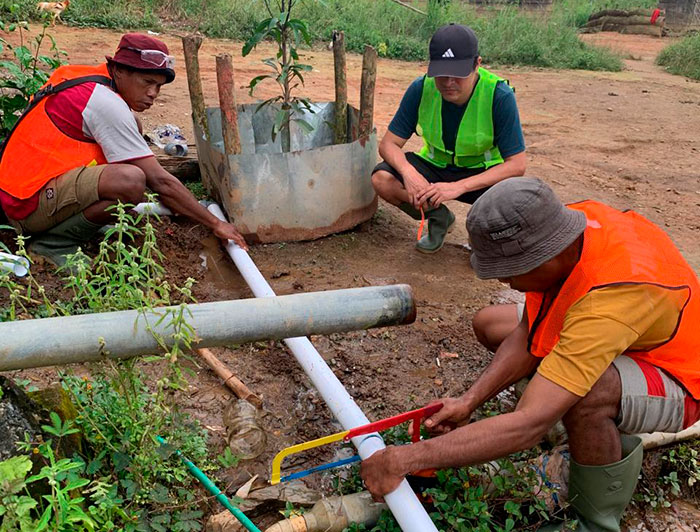
Their first tasks included gathering information through site assessments, finalizing the water system design, and starting construction on a project that would provide the community with reliable access to clean water. The goal was to build an intake structure, a water tank, and all necessary connections to deliver water directly to every household.
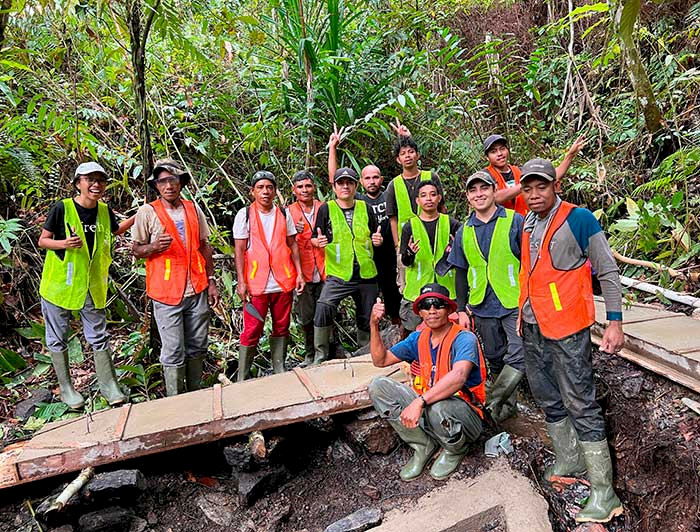
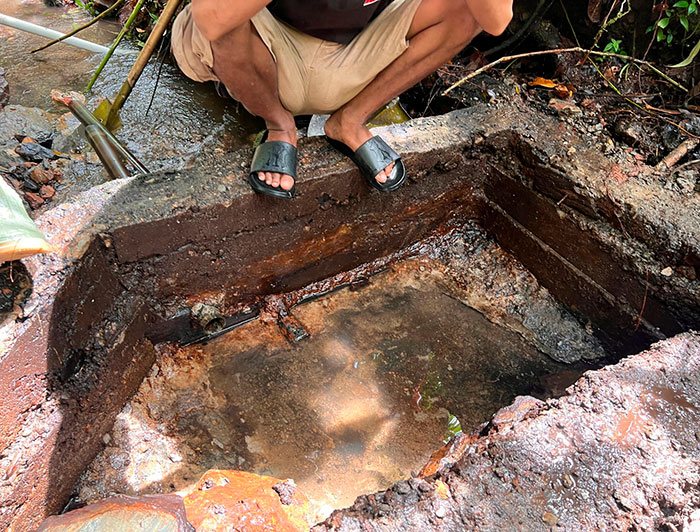
The process was collaborative from the start, with institutions, students, professionals, and the Wansar community all involved. Early progress included building the bases to shelter the tanks near homes, refurbishing the reservoir, and developing the water intake system from a river located 500 meters from the village.
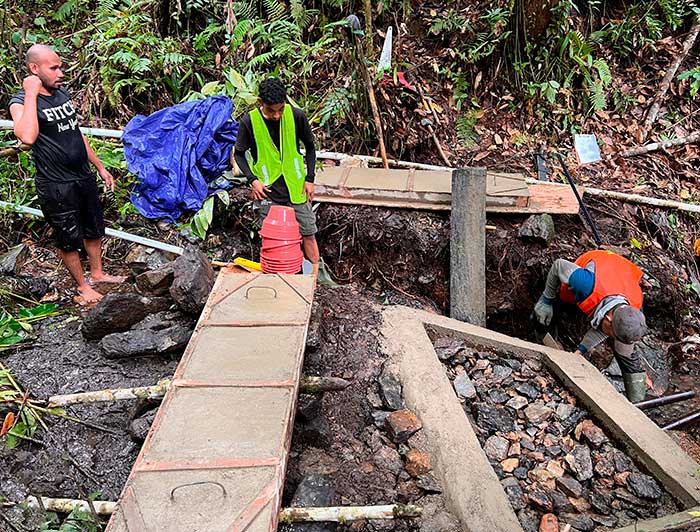
Throughout the project, the team communicated in Spanish, English, Bahasa Indonesia, and Buru—a linguistic challenge that they managed to overcome, finding ways to connect and move forward. They immersed themselves in the daily life of Wansar, working alongside the community and with the NGO Pohon Sagoe, which has led community development efforts in the area for years. In March, they encountered a setback when the rainy season arrived early, cutting off access to Wansar and delaying the arrival of materials and equipment.
The UC Chile students returned to Chile in the last week of April, having contributed to the construction and developed a handbook for local teams and the community, to guide the next steps of the project. By the end of May, UC Chile Civil Engineering graduate Angelo Brochon will join the effort, supporting the final stages of implementation.
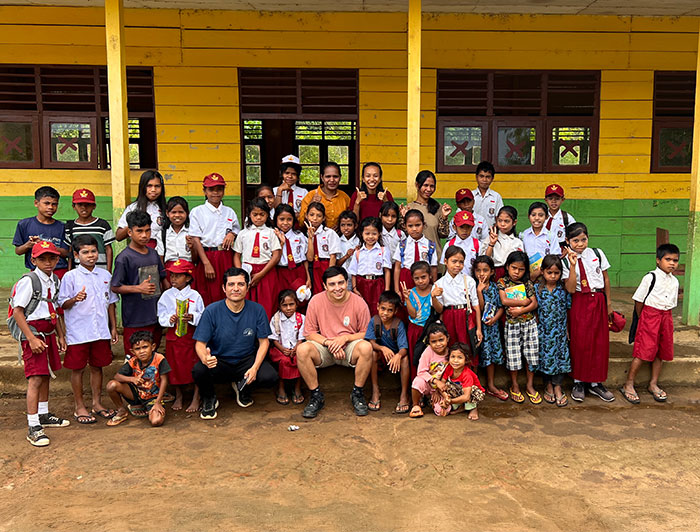
For student Braulio Rodríguez, “traveling to Indonesia and working alongside the Wansar community on a construction project has been a formative experience, both personally and professionally. I’m deeply grateful and proud to have contributed to a collective effort that leaves a lasting, positive impact and inspires future projects of this kind.”
Professor Freddy Yáñez concludes, “In a time of social and environmental crisis, it’s essential that we prioritize how we use material resources and channel all our creative energy into reducing inequalities. That’s where the true value of this project lies—it reflects our university’s commitment, and that of our students and faculty, to supporting vulnerable communities, no matter the borders that divide us.”


